How Fayetteville’s terrain and weather affect scissor lift choice
Steep grades across the Springfield Plateau mean approaches to exterior work can be sloped or stepped. On soft or rain‑soaked ground, smaller tires can sink, and transport paths may require higher ground clearance. Indoors, polished concrete and finished floors favor non‑marking tires and compact frames. Summer heat also increases interest in electric units for indoor air quality and noise control.
Narrowing the category by workspace and surface
Start with the work surface and the path to it: - Indoors on finished slab: electric slab scissor lifts with non‑marking tires; check doorway width and ceiling obstructions. - Outdoors on uneven grade: rough‑terrain scissor lifts; consider weight, wheelbase, and stabilization capabilities for sloped sites. - Mixed campus or commercial routes: low‑emission units and swing‑out trays that fit service corridors.
Platform planning matters in local distribution buildings and academic facilities where tasks can span long runs of lighting, duct, or signage. A wider deck with extension can reduce repositioning, but only if the approach path allows the chassis width.
Typical applications around Fayetteville
- Facility care in academic buildings with restricted access: compact electrics sized for elevators and double doors. See: /electric-scissor-lift-rental/
- Industrial and logistics yards with gravel or compacted fill: rough‑terrain units with higher clearance. See: /rough-terrain-scissor-lift-rental/
- New multifamily and hillside residential framing: outdoor scissor lifts sized for grade and soft subbase.
When a boom lift fits better
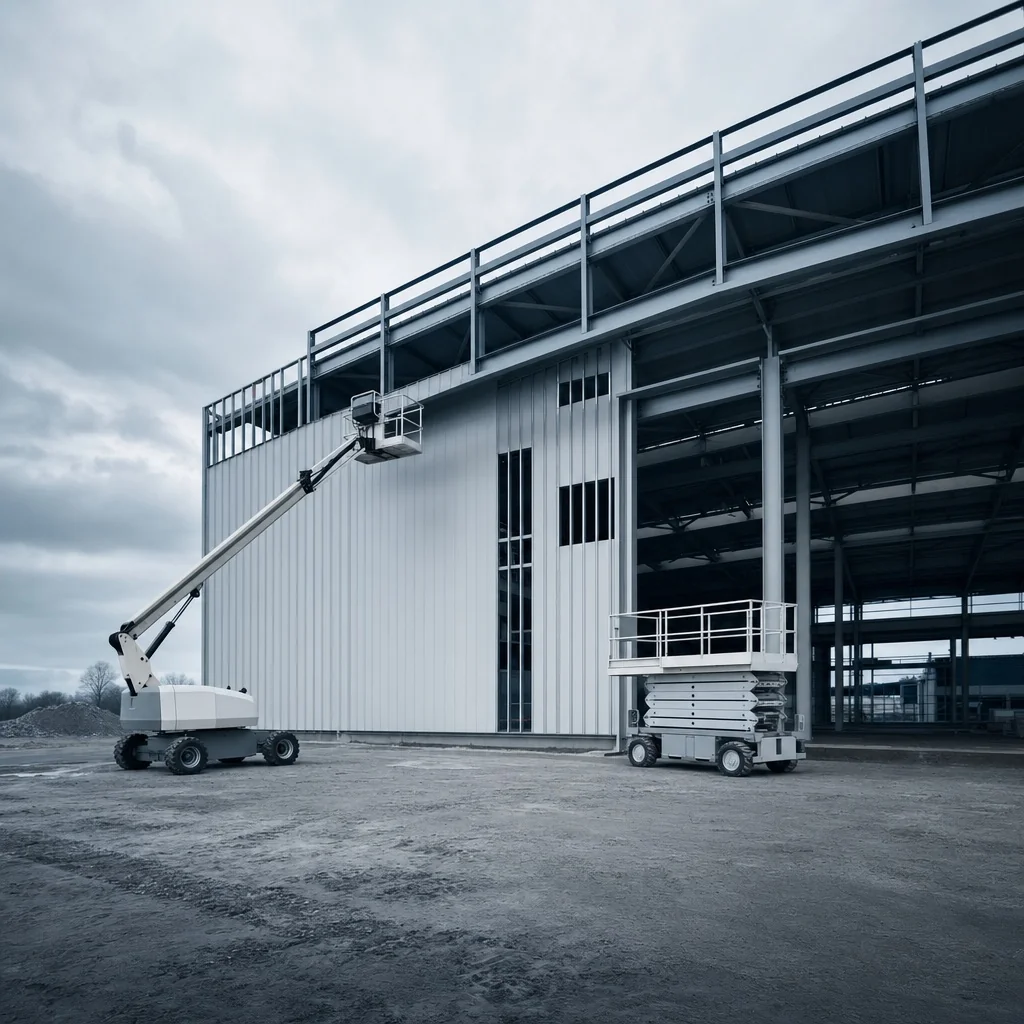
If the machine cannot sit below the task or obstacles block a straight-up approach, a boom lift provides up-and-over reach. Compare options at /aerial-lift-rental/ or go directly to /boom-lift-rental/ for articulating and telescopic models.
Fayetteville considerations at a glance
- Hilly, rocky approaches can limit turning radius and trailer placement.
- Rain events can leave topsoil soft over limestone, affecting ground bearing.
- Mixed interior heights require attention to platform capacity and compact footprints.
Always rely on site conditions, the selected unit’s instructions, and project procedures when planning elevated work.