Start with the ground and the route
The Springfield Plateau terrain means the generator or light tower may sit on a slope or soft shoulder. Note the steepest grade at the parking spot and along the tow route. A wider wheel track and leveling jacks matter more on uneven gravel lots common around new builds and industrial sites. If the unit must pass under low tree limbs or through tight service drives near older masonry, measure clearance and turning radius before anything else.
- Identify slope where the machine will sit
- Check tow vehicle access and turning room
- Confirm surface type: asphalt, compacted base, or saturated turf
Power sizing in campus and industrial settings
Mixed loads are typical here: site trailers, small tools, temp HVAC, or pumps during heavy rainfall. Start with the true continuous load, then layer in starting currents and any voltage-sensitive devices. Long cable runs on spread-out work areas add voltage drop, which can push you toward a larger generator or a closer placement. Where electrical tools share space with sensitive electronics, onboard voltage regulation can matter as much as kW.
If you’re coordinating aerial work after dark, power needs may also include battery charging for lifts or hand tools. See lift categories at /electric-scissor-lift-rental/, /rough-terrain-scissor-lift-rental/, and /aerial-lift-rental/ to align charging or auxiliary circuits with working height and surface.
Light tower coverage on uneven lots
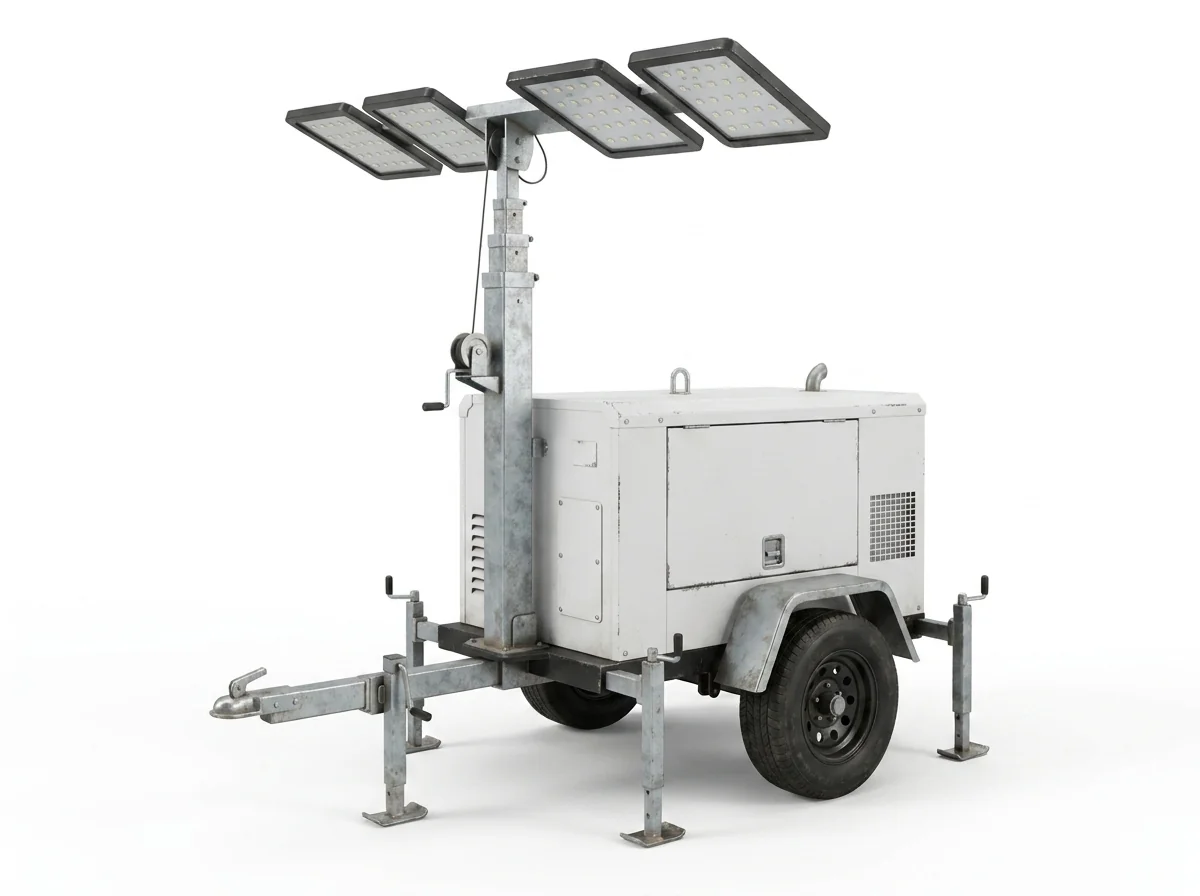
Steep residential lots and rocky cuts can block light angles. A higher mast and directional LED heads help reach façades or rooflines when the tower can’t sit directly below the task. On sloped shoulders, prioritize units with robust leveling and outrigger stance. For long linear work—utility runs or multifamily frontage—consider multiple smaller towers spaced to reduce glare and shadows from grade breaks.
- Map the work edge: curb, footing line, or staging pad
- Note façade height and setback to anticipate beam angle
- Consider prevailing evening haze or fog after summer storms
Fuel, runtime, and weather windows
The regional climate brings hot afternoons and sudden downpours. Longer runtime tanks and weather-resistant enclosures limit mid-shift refueling in muddy conditions. If sound carries near dense housing, check dB ratings and plan placement to shield noise behind structures. For multi-day phases, think about refueling access when other equipment—like /telehandler-rental/ units or /forklift-rental/—will be moving pallets and materials nearby.
Coordination with elevated tasks
When towers support boom or scissor work, confirm whether the machine can sit below the task line or must light from the side because of slope or landscaping. For façade maintenance, pair towers with /articulating-boom-lift-rental/ where obstacles require offset, or /telescopic-boom-lift-rental/ for straight reaches. Actual site conditions, the selected unit’s instructions, and site procedures govern all elevated or exterior work.