
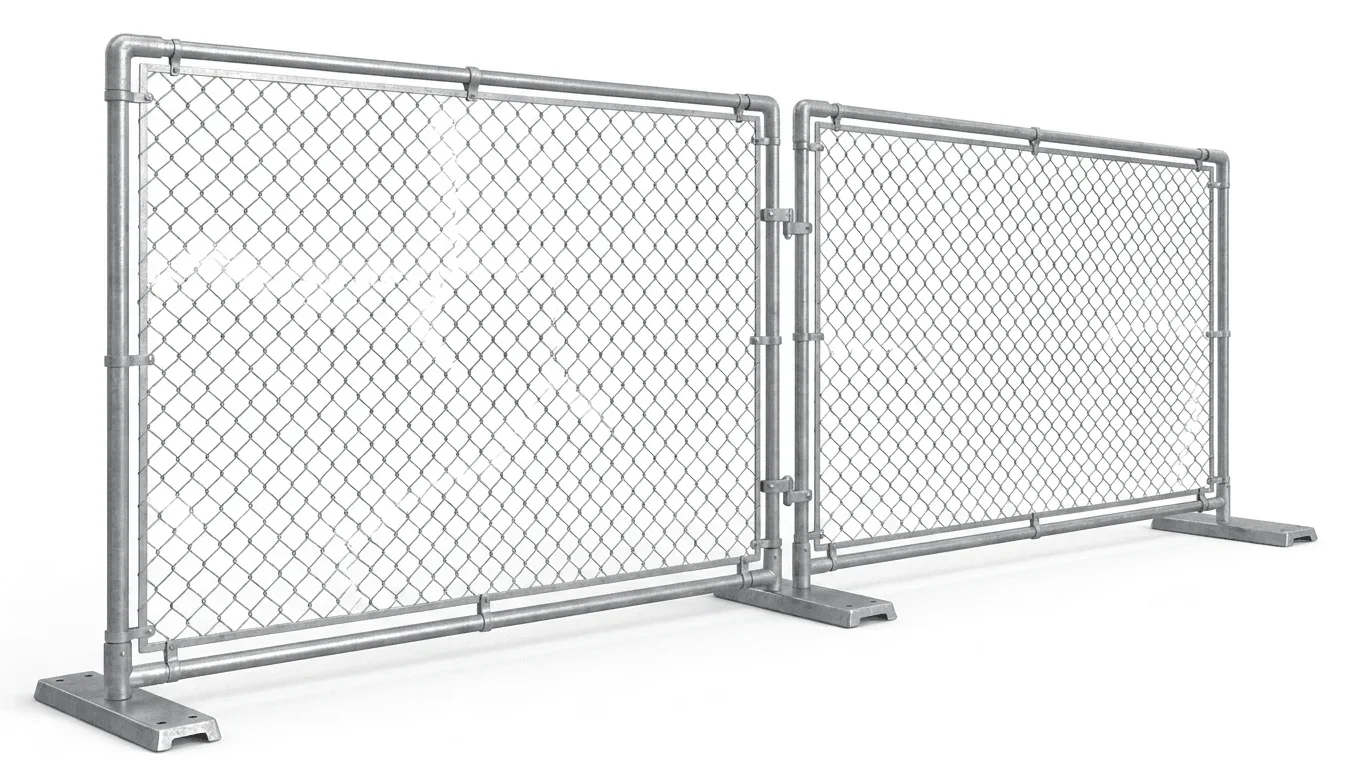
Map the line and the grade
Walk the fence path and mark changes in elevation. On sloped sidewalks and gravel shoulders, shorter panel lengths or step-down connectors help maintain ground contact. Where limestone outcrops break the line, plan offsets rather than forcing a straight run that leaves gaps.
- Identify surface types along the entire route
- Note gate locations for lifts and deliveries
- Check sightlines if barricades guide pedestrian flow
site-stability factors and stability in a humid, storm-prone climate
Heavy rain and saturated turf loosen supports. Choose base styles and site-stability factors plans that resist sliding and sinking on soft ground. In open exposures, additional weight or wind-permeable panels reduce sail effect after storms.
Gates and equipment corridors
Fayetteville jobs commonly share space with aerial lifts, forklifts, and delivery trucks. Gate width should match the widest machine using the corridor, with room for turning on grades. Coordinate with /boom-lift-rental/ or /telehandler-rental/ choices so equipment can pass without moving long runs.
Barricades for campus-adjacent work
Work near dense walkways benefits from low-profile barricades that curve around landscaping and step along stairs. Reflective options improve visibility during evening maintenance when paired with /generators-light-towers-rental/ for area lighting.
Terrain-aware site-stability planning
Rocky subgrades may prevent stakes. Freestanding systems with weighted bases avoid drilling into hardpan or heritage hardscape. On steep sections, break the run into shorter, terraced segments to keep bases flat and reduce tipping forces. Actual conditions, the selected unit’s instructions, and site procedures govern all exterior work.