Core aerial categories
- Electric scissor lifts: Best for flat, finished slabs with limited doorway widths. Typical for interiors and conditioned spaces. See /electric-scissor-lift-rental/.
- Rough-terrain scissor lifts: Wider stance and tread for exterior grades and gravel. Useful on developing pads where minor slope or soft spots exist. See /rough-terrain-scissor-lift-rental/.
- Vertical mast lifts: Compact, low ground pressure for tight interiors and delicate floors. See /vertical-mast-lift-rental/.
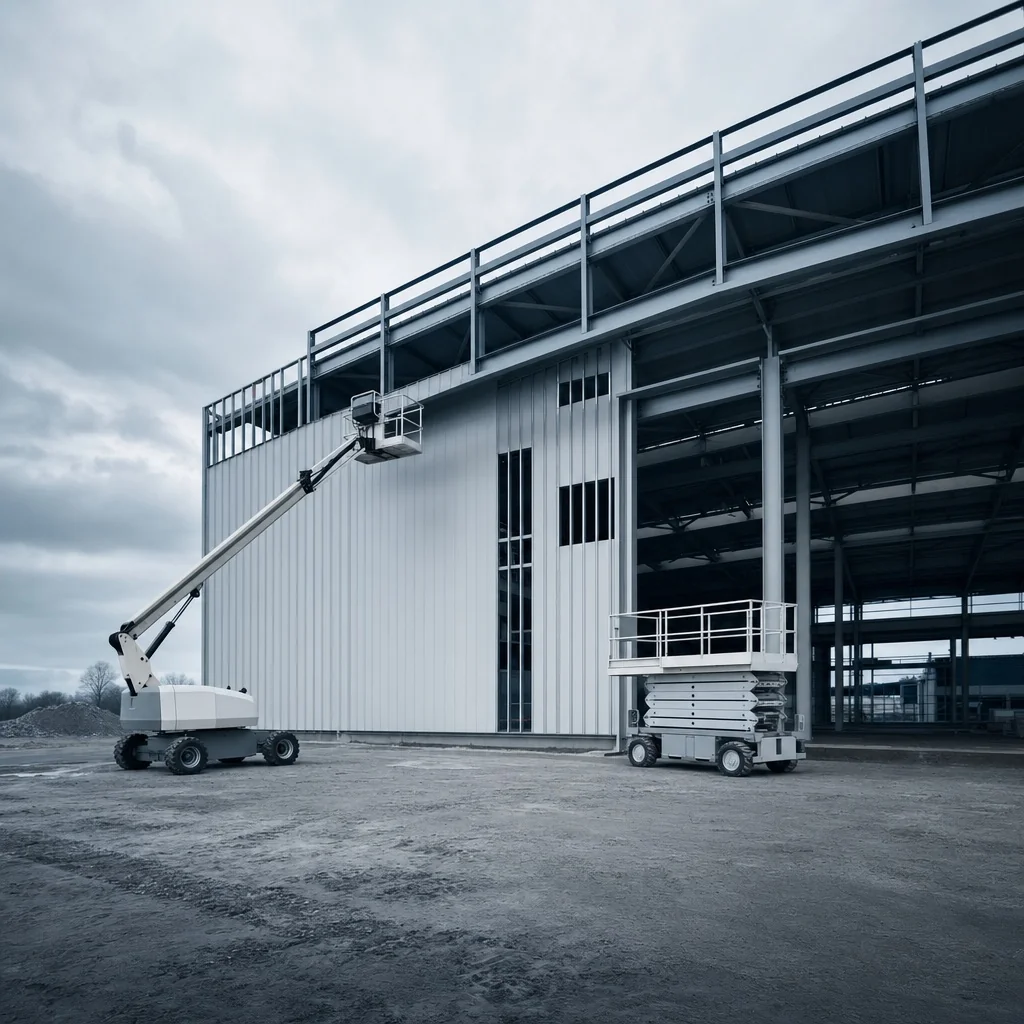
- Articulating boom lifts: Work up-and-over around trees, rooflines, and façade offsets common on hilly lots. See /articulating-boom-lift-rental/.
- Telescopic boom lifts: Direct horizontal reach for open approaches on industrial sites and multifamily builds. See /telescopic-boom-lift-rental/ and /boom-lift-rental/.
Actual conditions, the selected unit’s instructions, and site procedures govern all elevated or exterior work.
Terrain and approach in Fayetteville
Grades can be significant from curb to pad. Decide early whether the machine can sit below the task or must reach from a side position because of slope, rock, or landscaping. Side-reach often favors booms over scissors. If the route crosses soft ground after rain, plan for rough-terrain tires and a wider wheelbase. Low tree canopies near older buildings may limit stowed height during access.
Load, platform space, and task position
For cladding or MEP work, platform capacity and deck size can outweigh pure height. On sloped sites, a boom’s ability to reposition around obstacles can shorten time at elevation compared with a larger scissor that lacks outreach.
Site products that keep work moving
- Generators and light towers: Evening and storm-recovery work benefit from reliable power and targeted lighting on uneven lots. See /generators-light-towers-rental/.
- Storage containers: Secure staging that fits short, sloped approaches and protects materials in humid conditions. See /storage-containers-rental/.
- Temporary fencing and barricades: Grade-friendly barriers and gates sized for lift corridors. See /temporary-fencing-barricades-rental/.
Planning checklist for Ozark-ready selections
- Maximum working height and whether the machine can sit below the task
- Surface type, recent rainfall, and expected ground firmness
- Doorways, turns, and overhead clearances along the route
- Outreach needs around façades, trees, or retaining walls
- Power, lighting, storage, and perimeter needs for staging
For questions or to discuss site specifics in Fayetteville, reach out at (479) 341-5392 or visit /contact/ and /about/.